The UAE's trading app race: who wins the first-time investor?
Two in three baraka investors had never bought a share before. The winner will be the app people open every day.

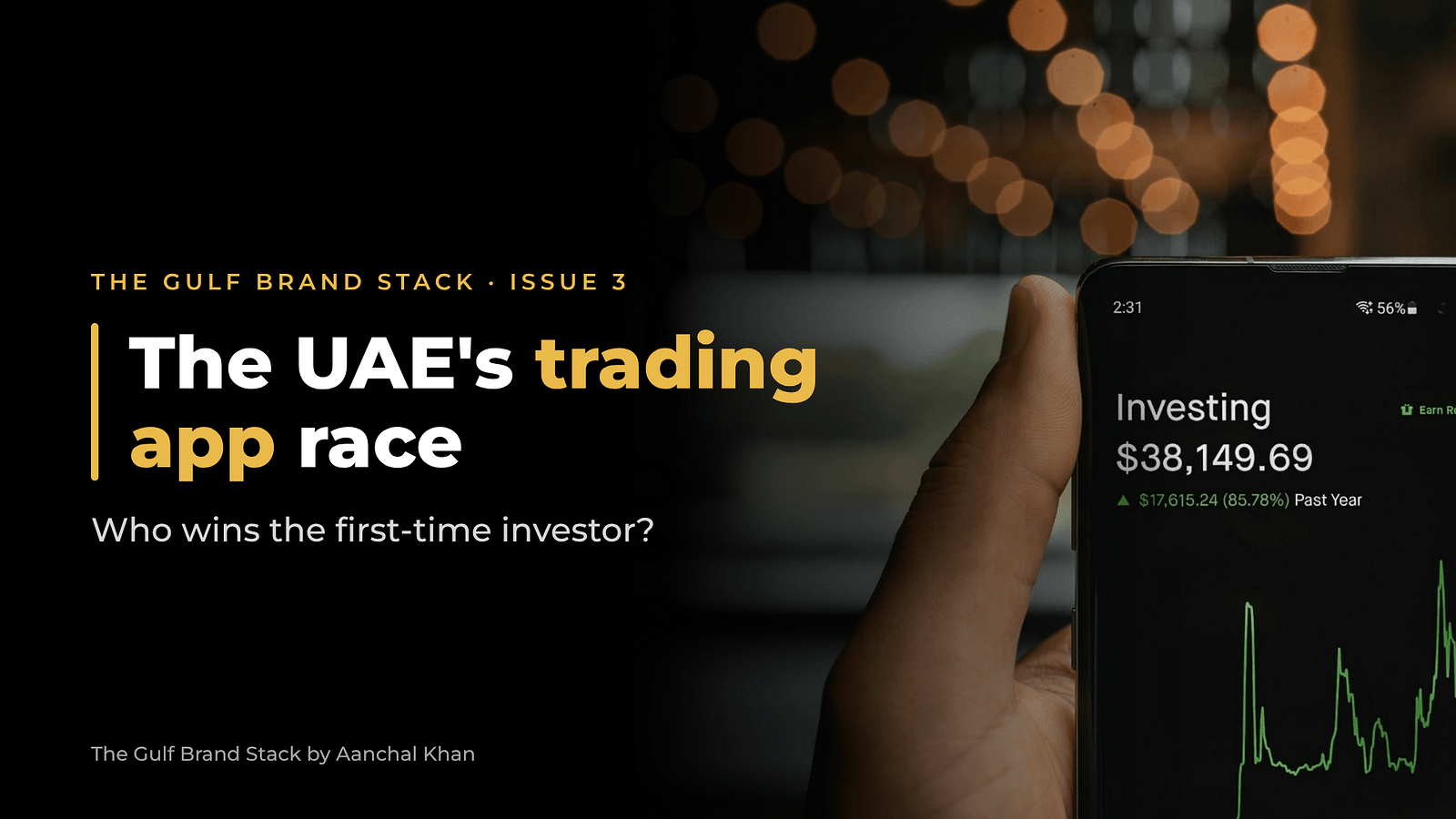
Two in three baraka investors had never bought a share before. Equiti, eToro, Capital.com and baraka are all chasing that first-time investor. For beginners, fear and trust matter more than fees, so the winner will be the app people trust and open daily, not the cheapest one.
There is a metro station in Dubai called Equiti. The name also sits on a youth football league, on a gate at an Abu Dhabi stadium and, this season, on the front of Al Wahda's shirt.
None of that sells a single trade. What all of it sells is more valuable: the feeling that this brand belongs to your city, and is safe enough to hold your first Dh500.
That feeling is the real product in UAE fintech right now. Here is why, and how the smartest apps are building it.
The market just filled up with beginners
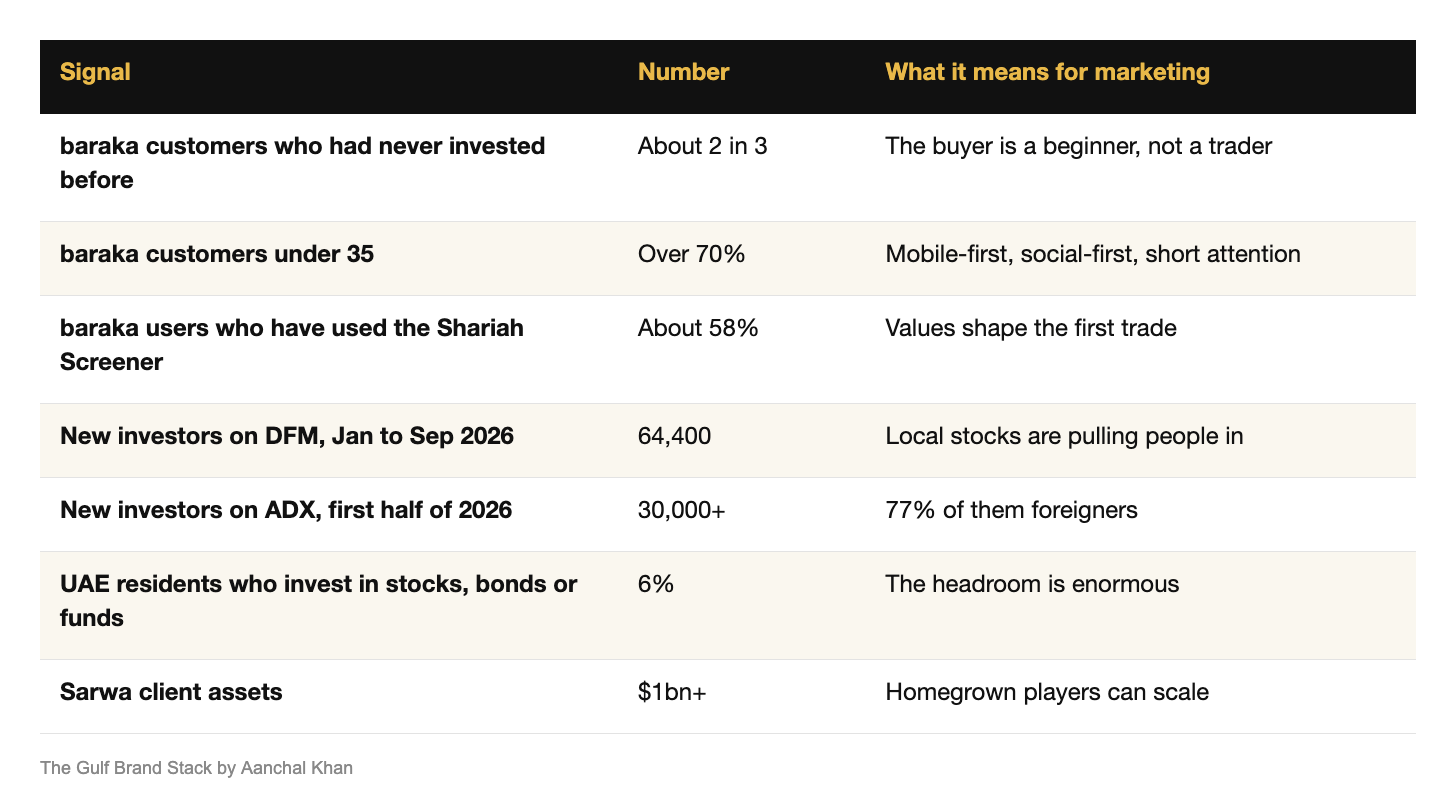
When most of your customers have never bought a share, your real competitor is not another app. It is fear. Fear of losing money, of looking foolish, of picking a platform that disappears.
Lower fees do not fix fear. Confidence does.
What I learned building this at Paytm Money
Before Dubai, I worked in product marketing at Paytm Money in India, a market also full of first-time investors.
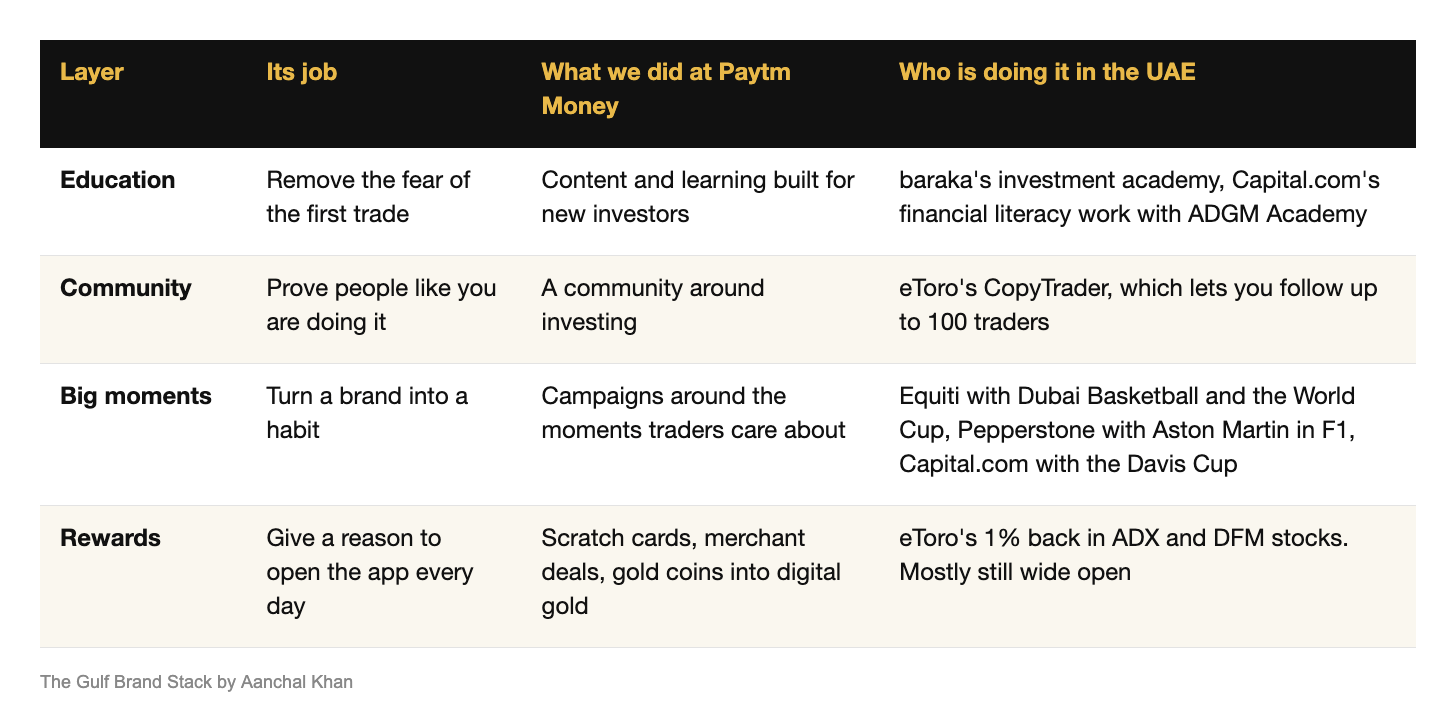
Brokers make money on trades. But trades only come from people who stay. So the real job is retention, and retention is built in layers.
Content and education took away the fear of the first trade. Community showed people that others like them were doing it. Big market moments gave them a reason to come back.
Then we made the app itself rewarding. Every transaction unlocked a scratch card. Some cards gave discounts at partner merchants, which became a revenue stream of its own. Others gave gold coins, and once you had collected enough, you could exchange them for real digital gold. That quietly promoted Paytm Gold too.
The whole point was to keep users engaged and loyal to the platform. One investing product slowly became a super app.
Here is how those same layers map to the UAE today.
Equiti is playing the long game best
Most finance brands buy a logo on a shirt and hope. Equiti has built something closer to a stack.
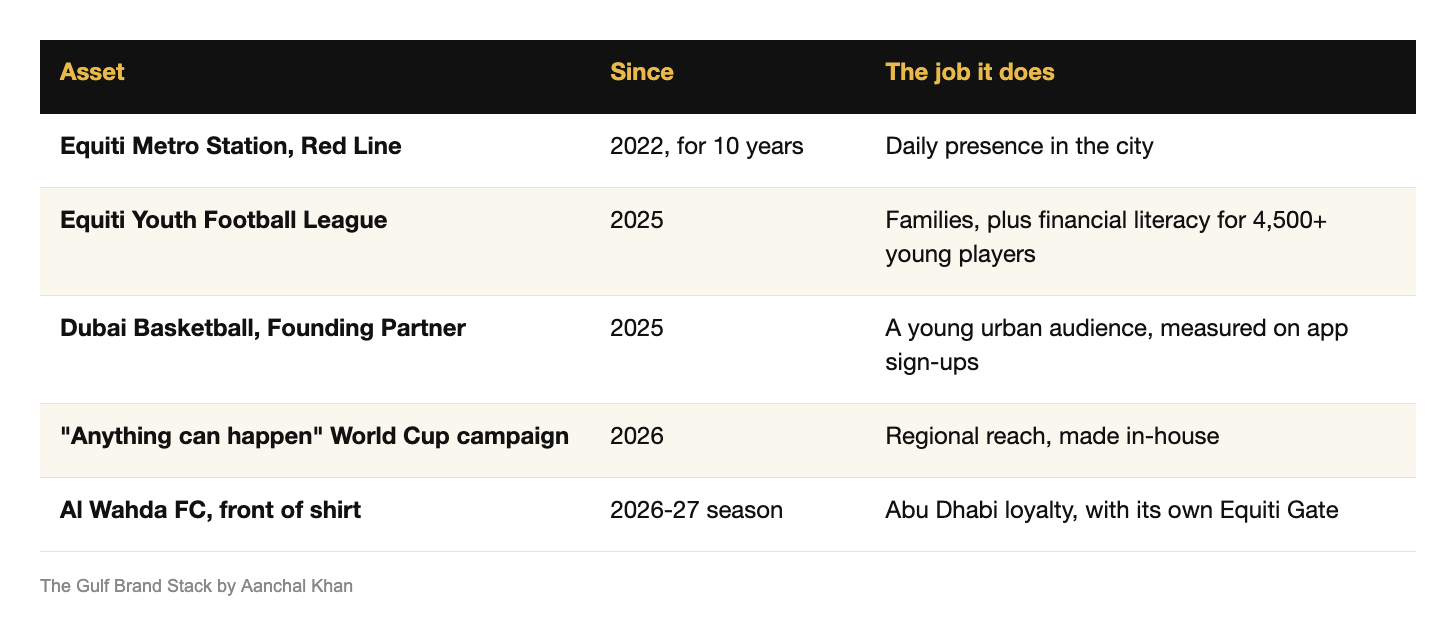
Two details stood out to me.
First, the Dubai Basketball deal is measured on app registrations at the arena and on conversions tracked through marketing mix modelling. Group CMO Chantelle Johnson put it as "moving away from passive impressions." That is the difference between sponsorship as decoration and sponsorship as a funnel.
Second, the World Cup campaign used AI characters built from photos of Equiti's own staff. It is a small creative choice with a big message underneath: real people are behind this platform.
Sponsorship gets attention. Education and community turn that attention into trust. Equiti is one of the few brands in the region doing all three on purpose.
The rules changed too
The regulator many of us knew as SCA is now the Capital Market Authority. Financial content creators need their own licence, and every creator who advertises now needs a Media Council permit.
That closes the cheap route of paying an influencer to post screenshots of their gains. Owned education, owned community and owned moments become the safer way to grow. The apps that already built those will feel the change least.
My take: the gap nobody has filled yet
The UAE has strong education and big moments. What I have not seen yet is the rewards layer done for the Gulf.
Imagine every first trade unlocking a reward from a Dubai brand you already love. Imagine rewards paid in gold, in a region where gold has always been the first savings account. Imagine a Ramadan or Dubai Shopping Festival season built into the app itself, fully Shariah-compliant.
That is how one trading app becomes the money app a family opens every day.
The app that wins the UAE will not be the one with the lowest fees. It will be the one a first-time investor opens on a quiet Tuesday simply because it feels like theirs.
Get the next article in your inbox every Tuesday.
Subscribe freeAanchal Khan is a Dubai-based marketing strategist and operator who runs marketing end to end and builds AI marketing automation. About Aanchal or work with her.
Also published on Substack.