talabat spent less on discounts than it planned. Growth sped up anyway.
The $9 million line in talabat's results, and what it tells every Gulf marketer about discounts.

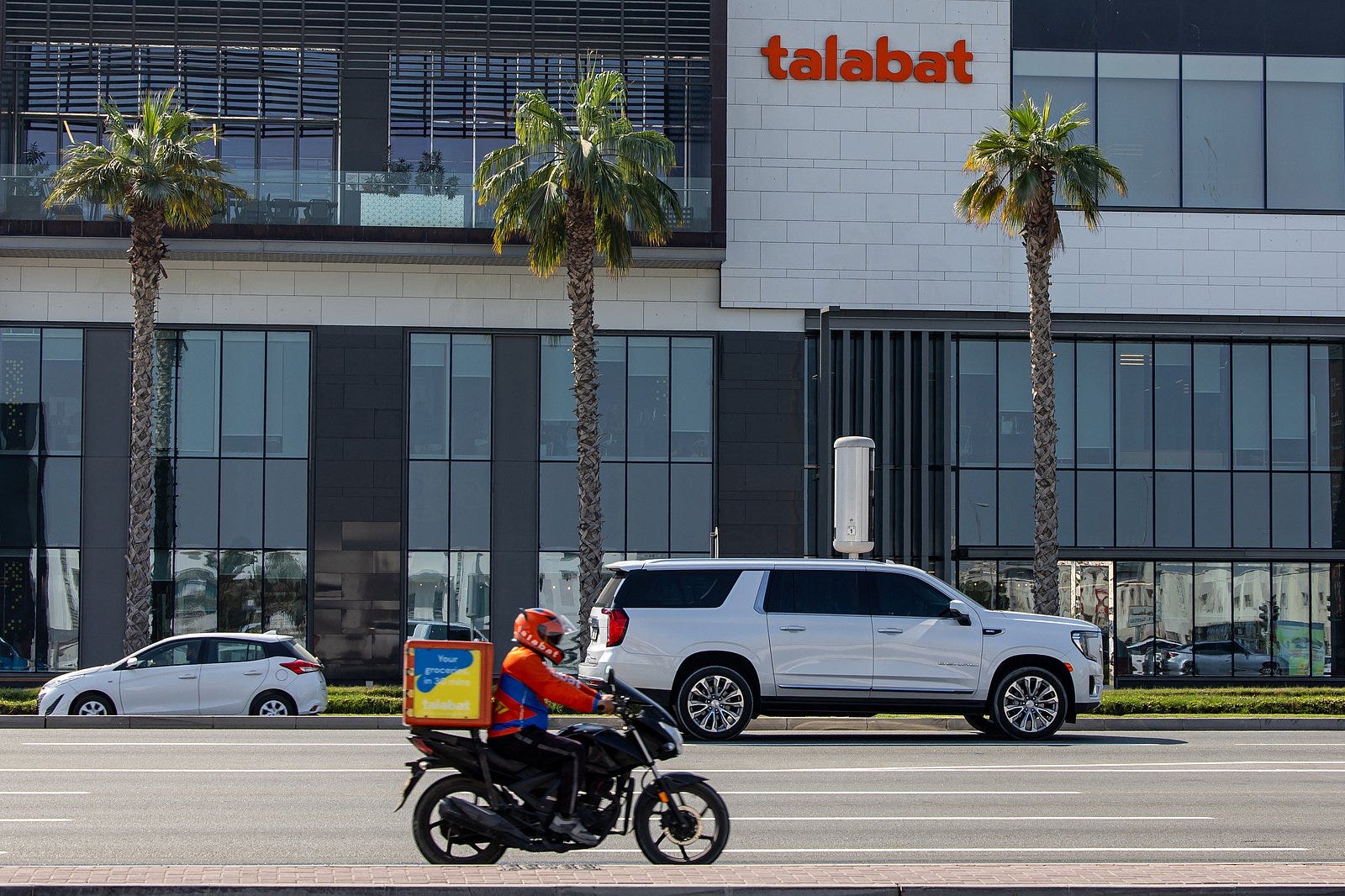
talabat set aside about $9 million for discounts and did not need to spend it, because the delivery price war turned out milder than expected. Revenue and orders still grew strongly. The lesson for Gulf marketers: habit, not coupons, is what keeps customers ordering.
Here's the number most people skipped in talabat's results last week: $9 million.
That's how much talabat set aside for customer discounts this quarter and didn't spend, because the delivery price war came in softer than it expected.
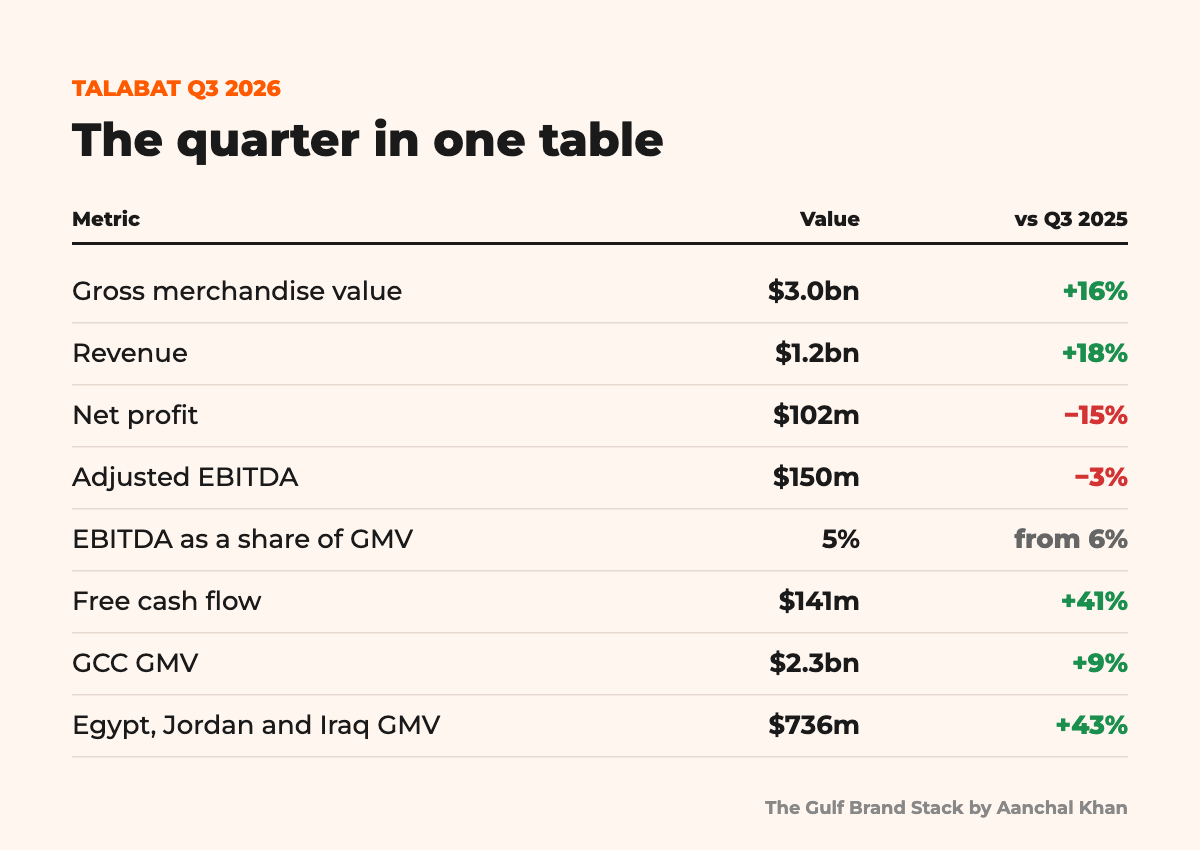
Spending less to win customers usually slows growth. talabat's sped up. Revenue up 18%. GMV up 16%. Full-year outlook raised for the second time this year. Profit fell 15%, and that's on purpose too. Here's what the Gulf's biggest delivery brand is really buying.
1. The $9 million it didn't spend
talabat's own explanation is simple: competition in food delivery was less intense than it expected, so about $9 million of budgeted incentives stayed in the bank.
Read that as a marketer. talabat set money aside to fight a discount war, and the war came in softer than planned. $9 million is close to a tenth of the quarter's profit.
The pressure hasn't gone away. Keeta, the international arm of China's Meituan, marked its first year in the UAE in September and ran a UAE-wide festival with discounts of up to 50% in October. talabat's quarter says it can live with that.
At Paytm, I saw how fast cashback buys orders. The hard part is what customers do when the cashback stops.
2. The growth is moving outside the Gulf
The GCC grew 9%. Egypt, Jordan and Iraq grew 43%, and their share of GMV rose from 20% to 25% in a year.
The Gulf is the base. The new growth is coming from bigger, more price-sensitive markets. That gives one brand two jobs: premium convenience in Dubai and value in Cairo. Few brands in the region have to stretch that far under one name.
3. Earning less, on purpose
talabat is running a $120 million programme to grow grocery and its other services beyond restaurants, and says it's on track. The drop in margin, from 6% to 5% of GMV, is that spend showing up.
The company can afford it. Free cash flow rose 41%. It had $711 million in net cash at the end of September and is buying back $69 million of its own shares.
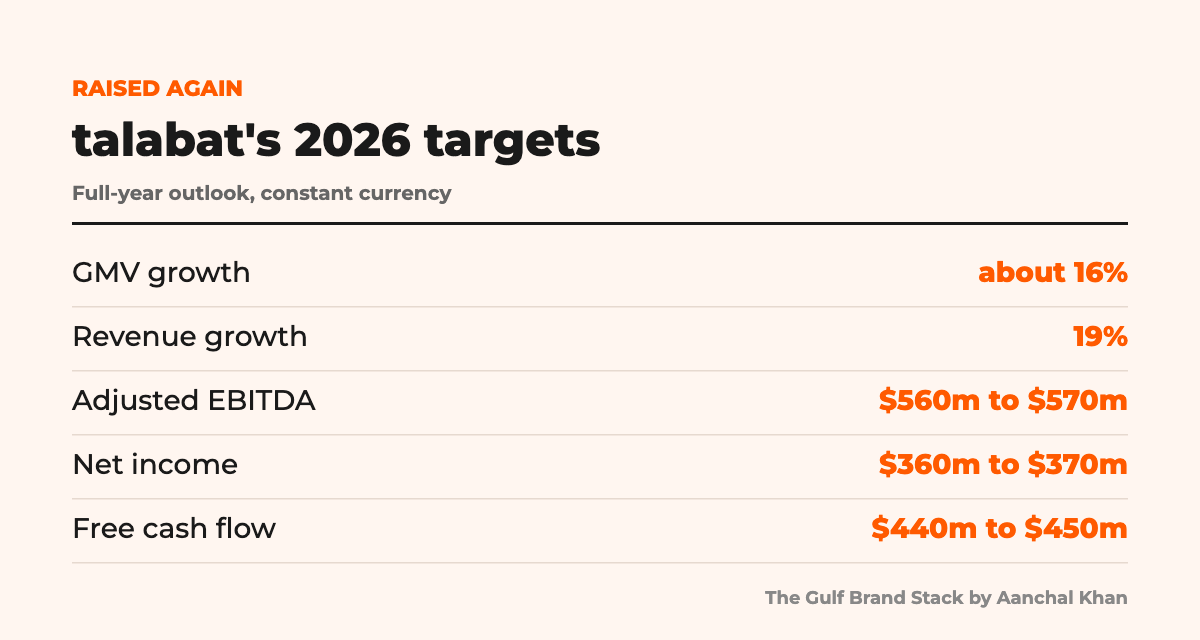
CEO Toon Gyssels said growth accelerated in the third quarter and he expects it to speed up again in the fourth. The raised targets for 2026:
4. Uber is quietly sitting on both sides
In July, Uber agreed to buy Delivery Hero, talabat's parent, in a $14.8 billion deal expected to close in the second half of 2027. Delivery Hero keeps its 80% stake in talabat through its MENA arm, and talabat says its operations, strategy, leadership and listing stay the same.
Now look at talabat's biggest homegrown rival. Uber already owns Careem's ride-hailing business outright. In June it paid $100 million for another 12.5% of Careem Technologies, the super app that runs Careem Food, cutting e&'s stake to 37.53%. Both sides also hold options that could hand Uber the rest between December 2031 and January 2032.
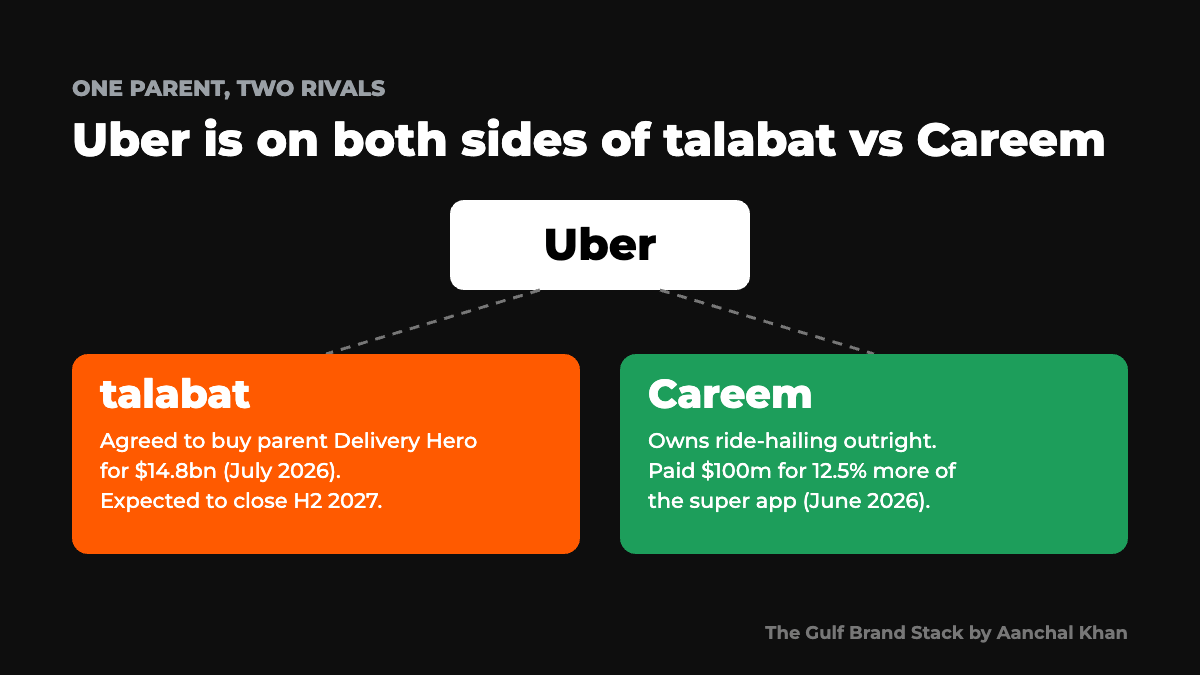
If both deals close, the two biggest delivery brands built in the Gulf will answer to the same parent. My read: the brands stay separate, and the discount war between them gets a lot quieter.
5. talabat has done this before: the Zomato deal
talabat's UAE lead wasn't only built. Part of it was bought. In March 2019, Delivery Hero bought Zomato's UAE food delivery business through talabat. Indian media put the price at about $172 million, and the deal added roughly 1.2 million orders a month.
Zomato left the UAE and went home to win India. Today it leads the Indian market with about 57% of food delivery by order value at the end of 2025, against Swiggy's 43%.
As an Indian marketer living in Dubai, I find this one fascinating. The app that leads India sold its UAE customers to the app that leads the Gulf.
6. The bigger picture: delivery is eating dine-in
UAE food delivery orders rose 15.2% in the first half of 2026, even as overall restaurant demand weakened. More meals are moving from the restaurant table to the couch.
That's the tailwind every delivery brand in the Gulf is riding. The fight now is over who owns the habit.
The Gulf gap I see
Habit first. Coupon second.
Coupons win the first order. Habit wins the hundredth. Once opening talabat is simply what you do on a tired Thursday night, you stop hunting for a discount code. talabat's quarter proves it: less spent on incentives than planned, and its Gulf business still grew 9%.
If you run marketing for a consumer brand in the Gulf, ask your team two questions this week. What habit are we building? And how much of our growth would survive if every coupon stopped tomorrow? If nobody knows, the budget is buying orders, not a brand.
Brands are communication. Every touchpoint is a message.
Get the next article in your inbox every Tuesday.
Subscribe freeAanchal Khan is a Dubai-based marketing strategist and operator who runs marketing end to end and builds AI marketing automation. About Aanchal or work with her.
Also published on Substack.